
Losing a significant amount of weight is an incredible achievement. Whether through lifestyle changes, bariatric surgery, or medically supervised weight loss, it often represents months or even years of commitment, discipline, and personal growth.
But for many people, reaching their goal weight doesn't necessarily mean reaching the body they imagined.
Despite all their hard work, they may still struggle with excess skin, changes in body proportions, or areas that no longer respond to exercise. And sometimes, these physical changes can make it difficult to fully enjoy the transformation they've worked so hard to achieve.
This is where plastic surgery after major weight loss can become the second chapter of a patient's transformation.
Understanding What Happens to Your Body After Major Weight Loss
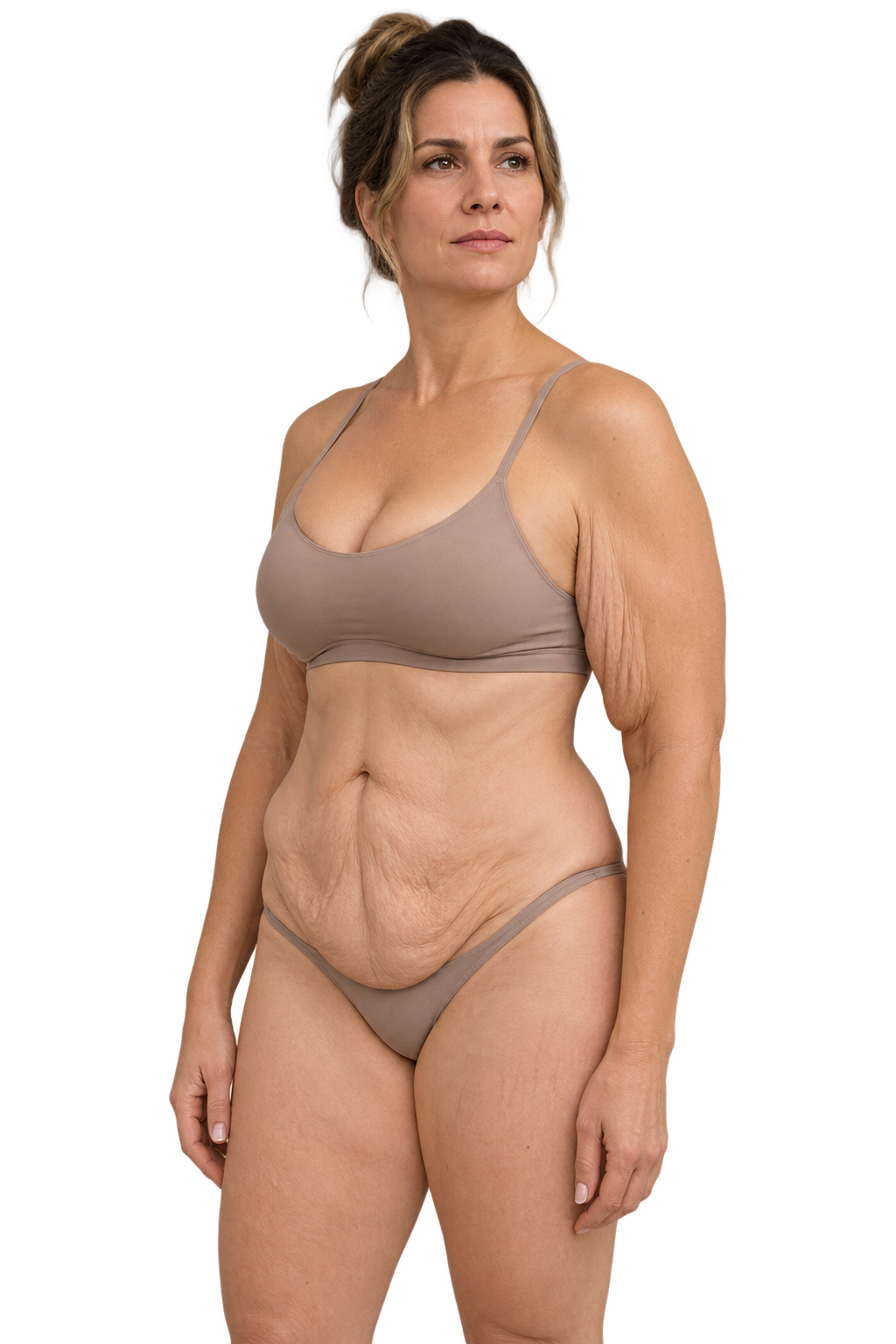
When the body undergoes significant weight loss, the skin and underlying tissues don't always adapt to its new shape.
Skin elasticity depends on several factors, including age, genetics, the amount of weight lost, and how long the skin was stretched.
As a result, patients may experience:
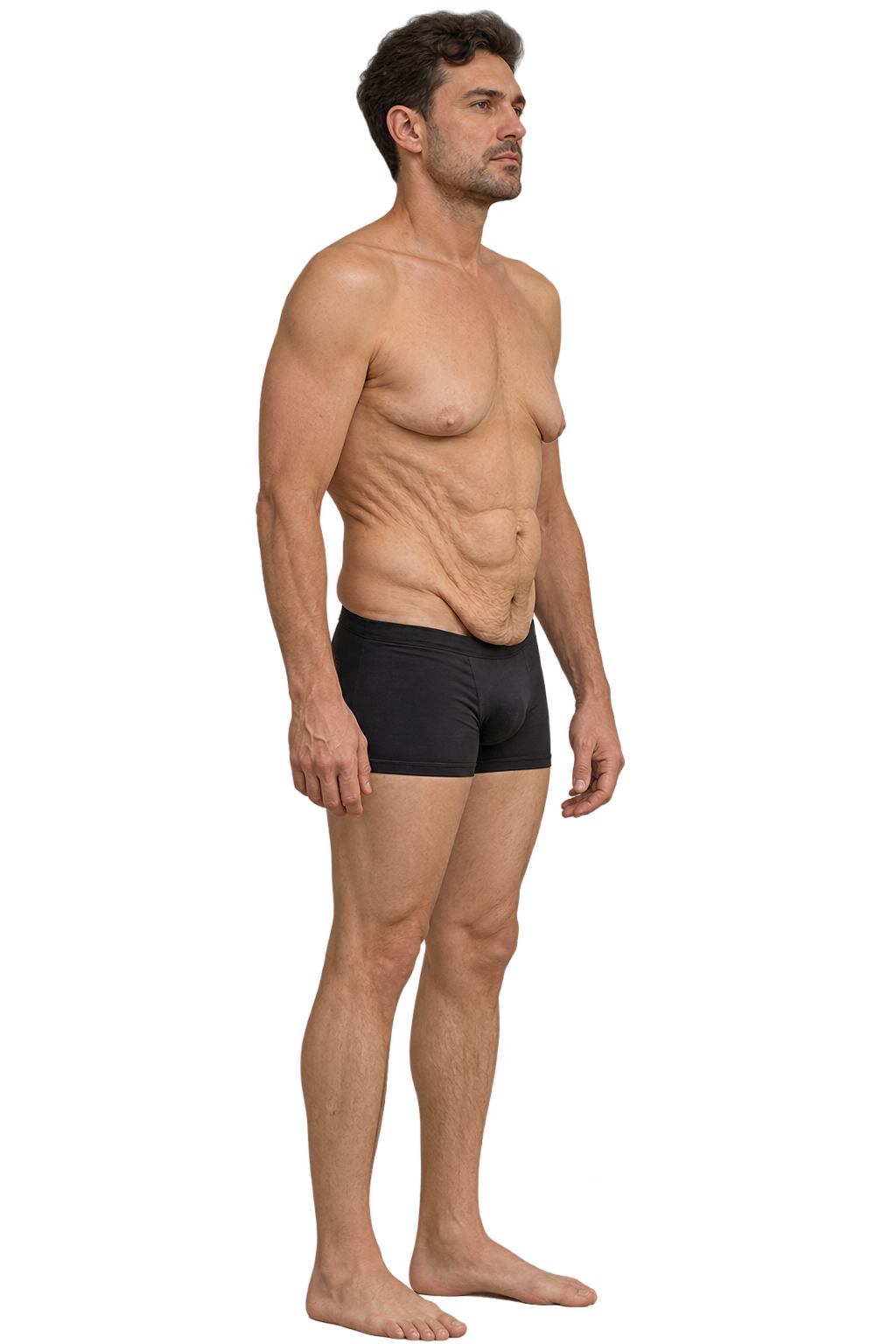
Loose or excess skin around the abdomen, arms, thighs, and back.
Loss of breast volume and changes in breast shape.
Reduced skin firmness and tissue support.
Persistent folds that cause discomfort, irritation, or difficulties with clothing.
Changes in body contours that exercise alone cannot fully address.
One of the most important things I explain to my patients is that excess skin is not a reflection of how hard you've worked or how dedicated you are to your fitness journey.
Exercise can strengthen muscles and improve overall health, but it cannot always restore the elasticity of significantly stretched skin.
Understanding this distinction is essential when exploring your options.
Body Contouring After Weight Loss: What Are Your Options?
There is no single procedure designed for every patient who has experienced major weight loss.
The right approach depends on your anatomy, skin quality, medical history, personal goals, and the areas you would like to improve.
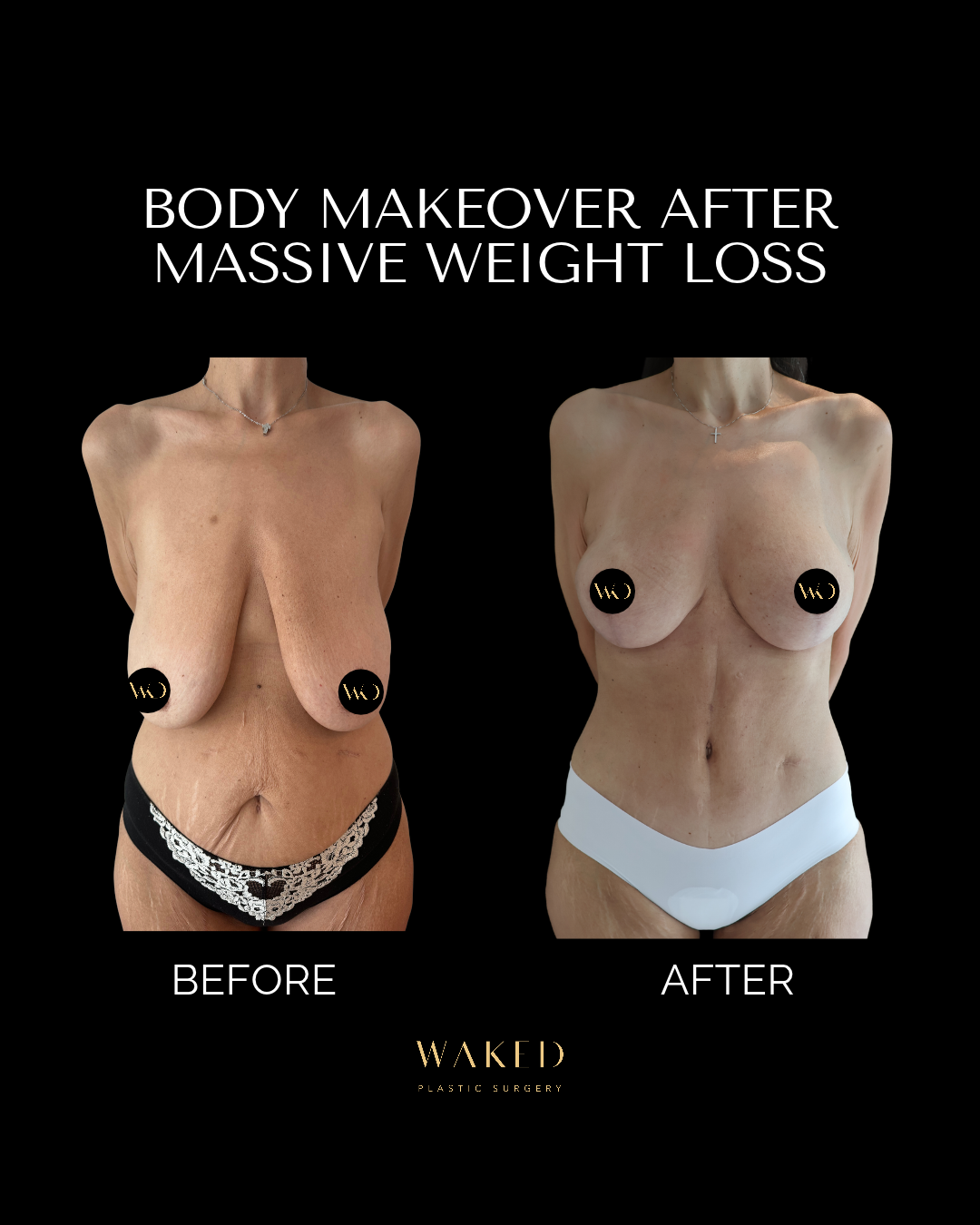
Some of the procedures we may consider include:
1. Tummy Tuck: Addressing Excess Skin and Abdominal Changes
After significant weight loss, the abdomen is often one of the areas where excess skin becomes most noticeable.
An abdominoplasty, commonly known as a tummy tuck, removes excess abdominal skin and can address weakened or separated abdominal muscles when necessary.
Depending on the patient's anatomy, it may also be combined with liposuction to refine the surrounding contours.
The goal is not simply to achieve a flatter abdomen, but to create a more balanced silhouette while respecting the body's natural proportions.
2. Breast Surgery: Restoring Shape, Volume, and Support
Significant weight loss can also change the appearance of the breasts.
As breast volume decreases, the skin may not retract sufficiently, leading to sagging, reduced upper-pole fullness, or changes in breast position.
Depending on the patient's needs, treatment may involve:
A breast lift to reshape and reposition the breasts.
Breast augmentation to restore lost volume.
A combination of breast lifting and augmentation.
Additional internal support techniques when appropriate.
In patients with weakened tissues, careful consideration of implant weight, tissue quality, and surgical technique becomes particularly important.
The objective is to restore harmony and proportion, not necessarily to create larger breasts.
3. Liposculpture: Refining the Body's Natural Definition
One common misconception is that liposuction can correct every contour concern after weight loss.
However, liposuction primarily removes localized fat deposits. It does not replace the need to address significant excess skin.
For appropriately selected patients, high-definition liposculpture may help refine body proportions and highlight natural anatomical contours.
In some cases, advanced techniques such as radiofrequency-assisted tissue tightening or fat grafting may complement the surgical plan.
However, their effectiveness depends on the condition of the tissues, and they cannot replace skin-removal surgery when laxity is substantial.
Why Surgery After Major Weight Loss Requires a Different Approach
Patients who have experienced substantial weight loss often present unique surgical challenges.
The skin may have lost elasticity, the supporting tissues may be weaker, and body proportions may have changed considerably.
This means that achieving a natural-looking result requires more than simply removing excess skin or adding volume.
It requires understanding how the tissues behave, how they will support the new contours, and how the body is likely to heal.
In my practice, I combine established surgical principles with advanced technologies when they offer a meaningful benefit for the individual patient.
But technology alone is never the answer.
The most important part of any successful transformation remains the surgical plan: knowing what to do, how to do it, and, just as importantly, when not to do something.
Final Thought: Your Transformation Doesn't Have to End at the Scale
Major weight loss is already a remarkable achievement.
Plastic surgery should never diminish that accomplishment or make patients feel that their journey is somehow incomplete without another procedure.
But for those who continue to experience physical discomfort, excess skin, or changes in their body contours, surgery may offer an opportunity to address concerns that weight loss alone cannot resolve.
For me, the most rewarding part is understanding the story behind each patient.
The effort they've made. The challenges they've overcome. And what they hope to achieve next.
Because the second transformation isn't about becoming someone new. It's about helping your body feel more aligned with the person you've worked so hard to become.
You can book your consultation directly through the website. Live abroad? We also offer online video calls, just send an email to: info@drwaked.be